


From Sand to Shine: The Origins of Fused Glass Art
STUDIO JOURNAL · JUNE 2026
Glass shouldn't exist. Not really.
It takes sand — the most ordinary thing on earth, the stuff between your toes at the beach — and transforms it, through fire alone, into something that catches light, holds color, and stops people mid-step in a gallery. That transformation has been happening for thousands of years. And every piece of fused glass art carries that entire story inside it.

Fused Glass Started Before Us
The first glass wasn't made by human hands at all. Lightning strikes on desert sand. Lava flows meeting the sea. Nature figured out the formula long before we did. Early humans found the result — a dark, volcanic glass called obsidian — and shaped it into blades and arrowheads. It was their sharpest tool. Their most prized material. Then, around 3500 BCE in ancient Mesopotamia, someone discovered they could make it themselves.
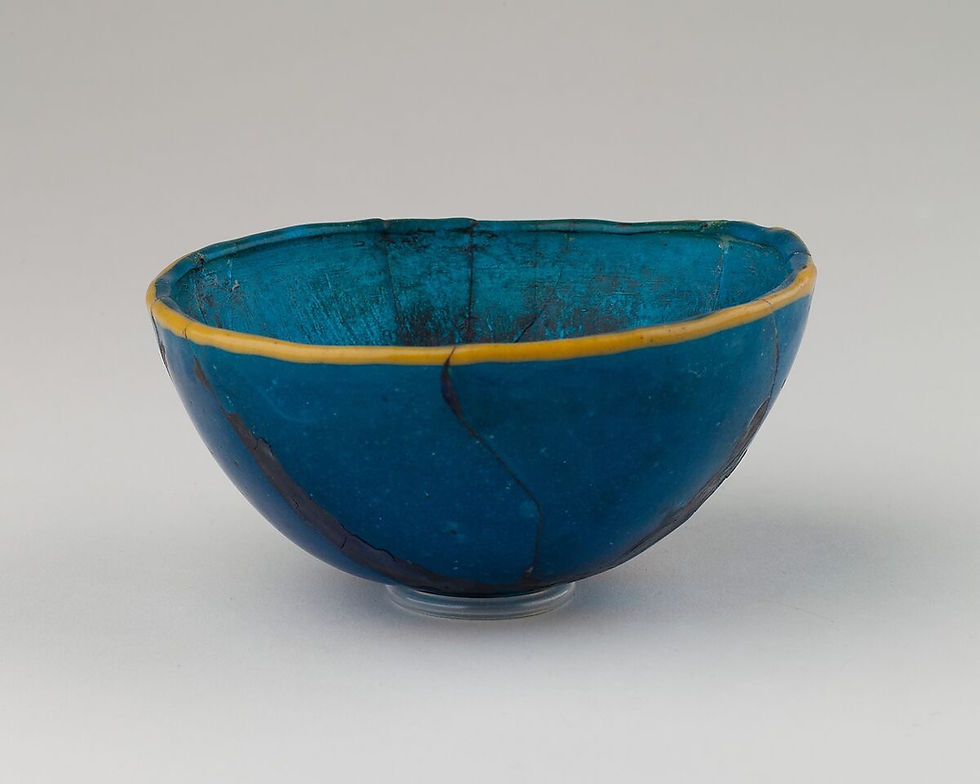
The Egyptians ran with it. They cast glass into jewel-bright vessels, wound molten threads into beads, fused colored rods together to create patterns that still feel fresh today. When you look at a 3,000-year-old Egyptian glass bowl, you don't feel the distance of history. You feel a jolt of recognition — someone made this beautiful thing with their hands and their fire, just like we do.
Suddenly glass was everywhere — in homes, in trade, in hands that had never touched it before. Then medieval Europe took it vertical: cathedral windows that didn't just admit light but transformed it, turning stone buildings into something luminous and alive.
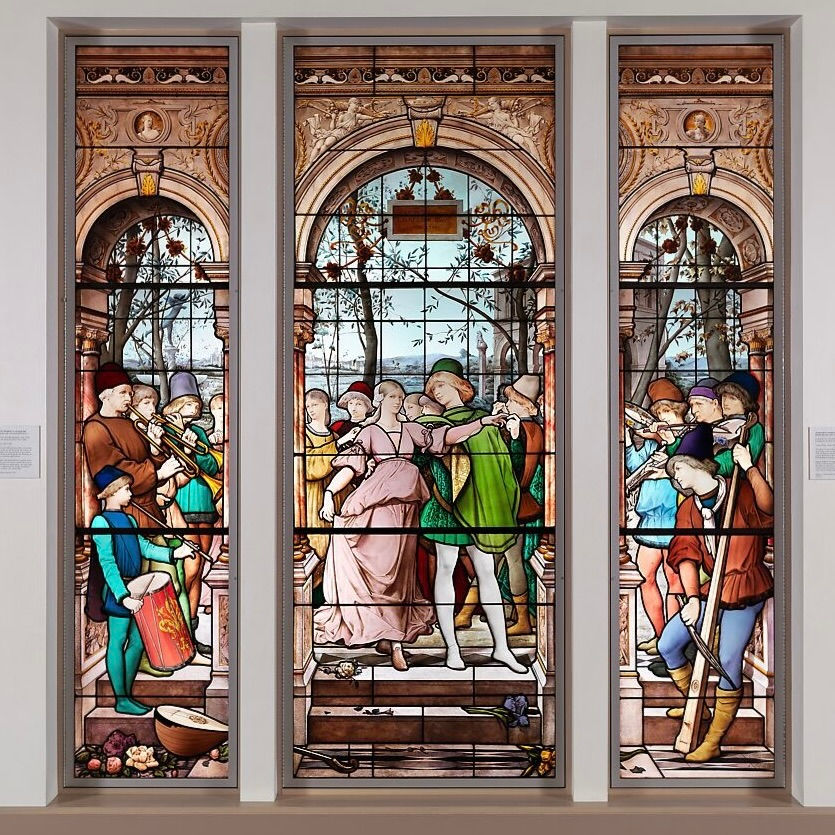
Murano glassmakers in Venice later turned the craft into a closely guarded empire. Their techniques were so valuable that leaving the island was punishable by death. Glass was literally worth protecting with your life.
Today...
All of this makes up the DNA of fused glass art today. The same silica. The same fire. The same irreversible transformation of something common into something extraordinary.
At Blazing Star Arts, when we layer glass sheets, choose colors, and program our kilns for a specific firing schedule, we're part of a 5,000-year conversation between human beings and one of the most remarkable materials the earth produces.
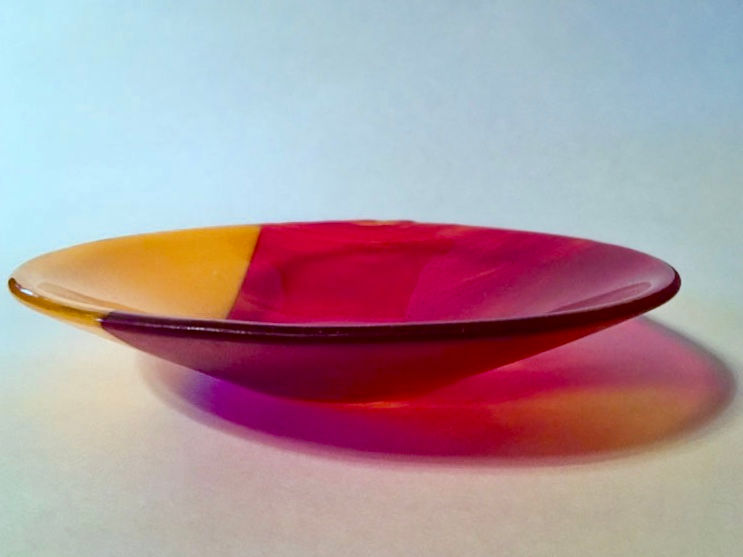
The sand didn't know what it could become. Neither did the first person who held a piece of obsidian and saw something worth keeping.
That sense of discovery in fused glass is what we chase in every firing.
Curious what that process looks like today? Browse our collections or reach out about a custom piece — we'd love to make something with you.
Comments